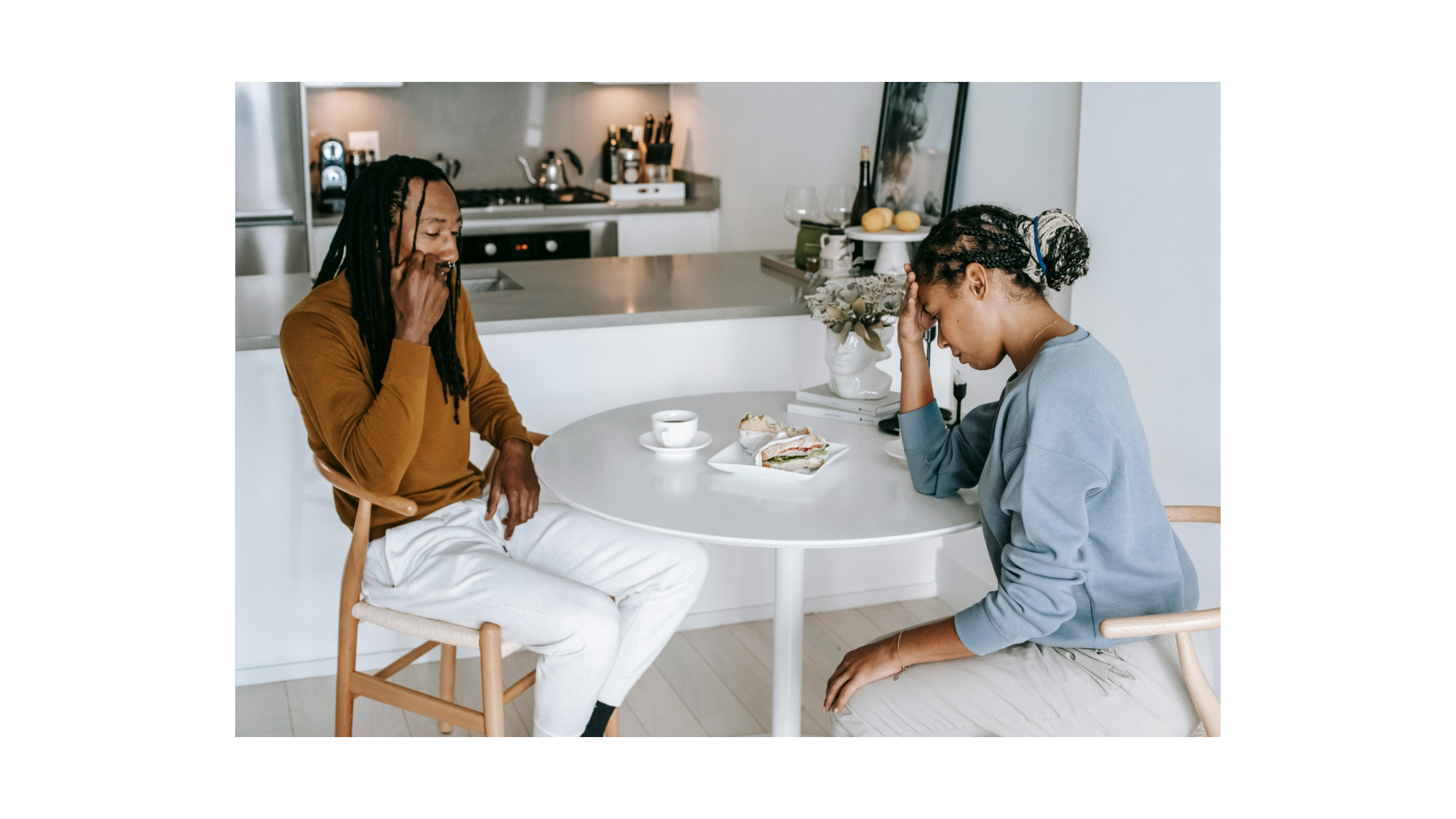

Tamara loved her mother-in-law. She really did. But six months into marriage, she had started dreading the sound of her ringtone. Not because the woman was unkind, but because every call seemed to end the same way, with Tamara’s husband quietly rearranging plans his wife had not agreed to, to keep the peace with his mother.
Sunday lunch, every single week, no discussion. Opinions on how the house should be run, offered uninvited and taken as instruction. A running commentary on when the grandchildren should arrive, as though the timeline belonged to someone else entirely.
Tamara was not trying to cut anyone out. She simply wanted her marriage to feel like her own.
This is a story we have heard before.
Why this cuts so deep in our communities
In many African, Caribbean and Asian households, family is not a backdrop to marriage. It is woven into it. You do not simply marry a person, you marry into a whole web of aunties, uncles, and parents who feel entitled to a say. Respect for elders runs deep, and rightly so. But respect was never meant to mean surrendering your own home.
The difficulty is that setting a boundary with in-laws can feel, to some families, like a declaration of war. It is not. A boundary is not rejection. It is simply the shape of a healthy marriage, drawn clearly enough that everyone, including the people who love you most, knows where it sits.
The signs the boundary has already been crossed
Decisions about your home, your money, or your children are made or overturned by a parent before you have even finished discussing them as a couple. Your spouse agrees with you in private, then folds the moment their parent objects. You feel like a guest in decisions that are supposed to be yours. Arguments with your spouse about his or her family have become a regular, exhausting feature of the relationship. You find yourself resenting someone you otherwise love, because nobody has protected the space between you and them.
What it costs the marriage
Unchecked, this does not simply strain a marriage, it can quietly starve it. Trust erodes when one partner feels they come second to a parent on every important decision. Intimacy fades when one partner is constantly defending the other to their own family, or defending their family to their spouse. Over the years, resentment builds a wall precisely where closeness should be.
What actually helps
Agree on the boundary together before you present it. This cannot be one spouse against the other’s family. It must be both of you, united, deciding together what your household needs to thrive.
Let the boundary be delivered by the person whose family it is. It will always land more gently, and hold more firmly, coming from a son to his mother or a daughter to her father, with the other spouse fully supported and visibly standing behind them.
Separate respect from compliance. You can honour your parents deeply and still decline to hand them the final say over your own home. These are not opposites.
Be consistent, not occasional. A boundary that is enforced only when you are frustrated and dropped the moment there is tension teaches everyone that it was never really a boundary at all.
Protect your spouse in front of their family. Nothing builds trust faster than watching your husband or wife choose you, calmly and clearly, in the very room where the pressure is coming from.
Seek support when it has gone on too long to untangle alone. A counsellor who understands these cultural dynamics can help a couple find language that honours both their families and their own marriage.
Tamara and her husband eventually sat down together and agreed on something simple. Sunday lunch would happen once a month, not every week, and he would be the one to tell his mother. The first Sunday they stayed home instead, Tamara did not feel guilty. She felt, for the first time in a long while, like she was finally living inside her own marriage.
If this sounds familiar, know this. Loving your family and protecting your marriage are not in competition. You are allowed to do both.
For more honest conversations like this one, listen to the podcast “Nobody Told Me Love Isn’t Enough,” or read the book “Love Isn’t Enough” by Anita Daniels, both available on Amazon and shereallyheals.com.
With love,
Anita